Quick Answer: Brown patch is a fungal lawn disease that thrives in Tulsa’s hot, humid summers. You’ll see large circular brown spots — sometimes with a dark outer ring. Treat it with fungicide, fix your watering habits, and lay off the nitrogen fertilizer until fall. We can handle all of this, and if we already take care of your lawn then you’re covered.
Brown patch (Rhizoctonia solani) is a fungal disease that attacks grass blades in warm, humid conditions — exactly what Tulsa gets from June through September. It spreads fast. A small spot can double in size overnight during a hot, wet stretch.
It loves your lawn when:
- Nighttime temps stay above 70°F
- Grass stays wet for long periods
- You’ve recently applied heavy nitrogen fertilizer
How to Spot It
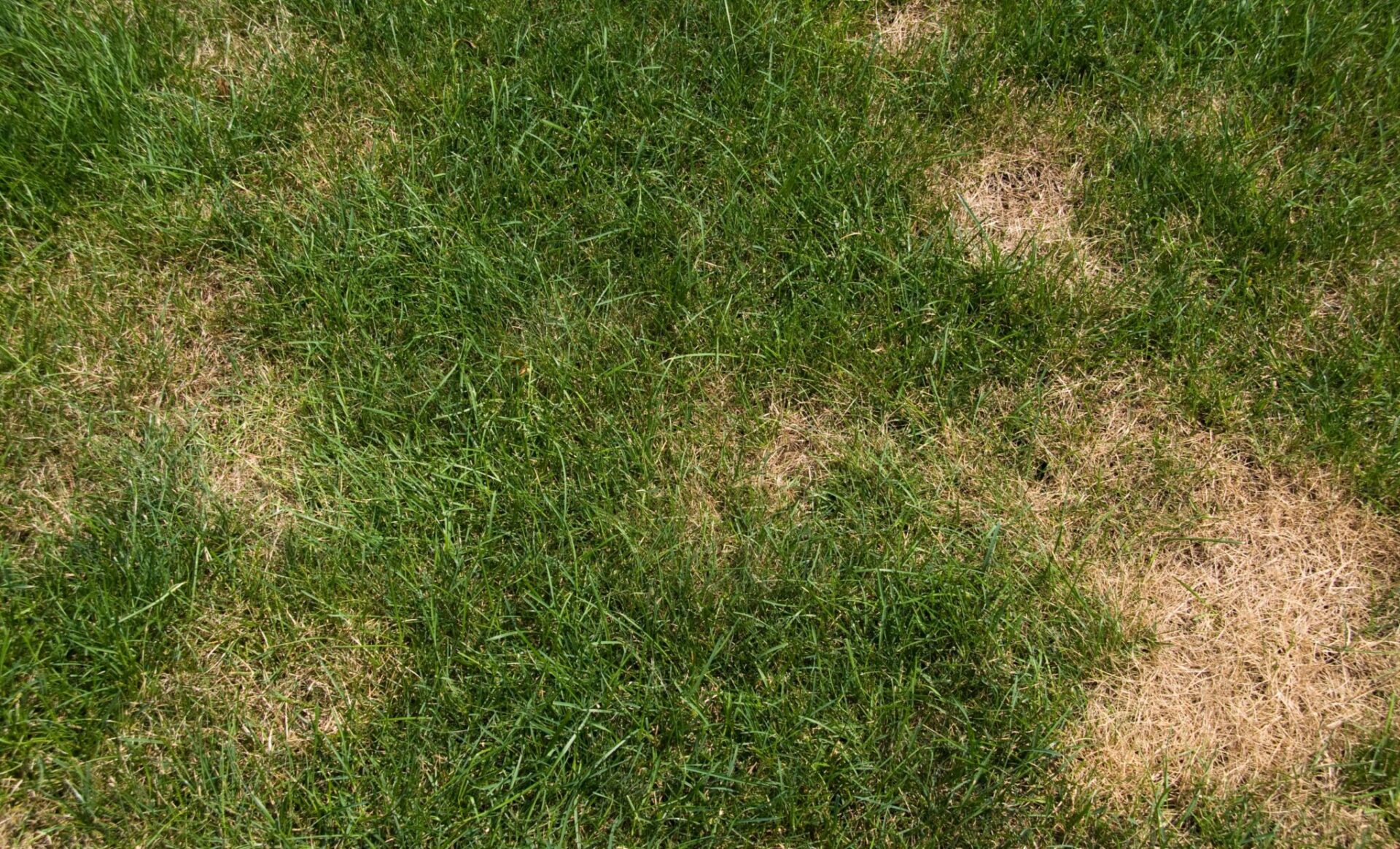
- Large circular brown areas — anywhere from a few inches to several feet across
- Dark “smoke ring” around the outer edge (look in the early morning with dew present)
- Tan, bleached blades with brown edges
- Affects tall fescue, bermuda, and zoysia
Not sure if it’s brown patch? Drought stress browns uniformly. Grubs let you pull turf up like carpet. Brown patch is circular, patchy, and fast-moving.
How to Treat It
1. Apply fungicide. Look for active ingredients like azoxystrobin, propiconazole, or thiophanate-methyl. Plan on 2–3 applications, 14–21 days apart. Store-bought products work for mild cases — professional-grade treatments work better for anything serious.
2. Water smarter. Switch to early morning watering only (before 10 a.m.) so grass dries before nighttime heat sets in. No more than 1 inch per week.
3. Hold the fertilizer. High-nitrogen fertilizer in summer creates lush, fast growth that brown patch loves. Wait until fall.
How to Prevent It Next Year
Well firstly, call us! We can handle any and all lawn diseases.
- Preventative fungicide in May or early June
- Core aeration to improve drainage
- Proper watering schedule all season long
- Dethatch if buildup exceeds ½ inch
Will My Lawn Recover?
Mild cases often green back up once fall arrives and conditions cool down — but the fungus stays in the soil and will return next summer without treatment. Severely damaged areas may need overseeding or resodding.
When to Call a Pro
If spots are spreading fast, treatments aren’t working after 3–4 weeks, or you want a preventative program that keeps brown patch from coming back — it’s time to bring in a professional.
We serve Tulsa, Broken Arrow, Bixby, Owasso, Jenks, and surrounding areas. Contact us today for a free lawn evaluation.